AI documentation assistant: the guide your readers actually wanted
An AI documentation assistant should help readers find trusted answers from your approved docs, with citations and a clear path when the answer is missing.
Most teams do not struggle with documentation because nobody wrote anything. They struggle because the right answer is too hard to find at the exact moment a customer needs it. A customer searches your help center, tries a few phrases, opens three tabs, skims quickly, and still cannot tell which instruction applies to their account. So they open a ticket. Support replies with an answer that already existed somewhere in the docs, and everyone feels the same quiet frustration: the content was there, but it did not reach the reader.
That is the real job of an AI documentation assistant. It should not replace your docs or invent friendly answers from thin air. It should make your existing knowledge easier to use. The best version turns pages into direct answers, shows where those answers came from, and helps your team see which questions your documentation still does not answer well.
Readers do not search like your team writes
Most documentation is organized around how the product team thinks. You have sections for authentication, billing, integrations, roles, deployment, settings, and release notes. That structure is useful because it keeps a large knowledge base manageable. The problem is that readers arrive with messy questions, not perfect category names.
They ask why an invoice failed, how to invite an agency without making them an admin, or whether they can move from staging to production without breaking an embed. Those questions may not match your page titles or your internal vocabulary. The docs can be correct and still be missed because the reader does not know what to search for.
An AI documentation assistant helps by understanding intent. It can connect the language of the reader to the language of your docs, then answer in a way that feels natural without drifting away from the source. That last part matters. If the assistant cannot show where the facts came from, it is not really helping your documentation. It is just a chat box with confidence.
The answer has to come from approved content
The easiest AI demo is also the most dangerous one. You put a chat widget on a page, ask a common question, and get a polished response. It feels impressive until you ask where the facts came from. If the answer comes from a model's general memory, it may not know your latest product change, your current plan limits, or the setup detail your team changed yesterday.
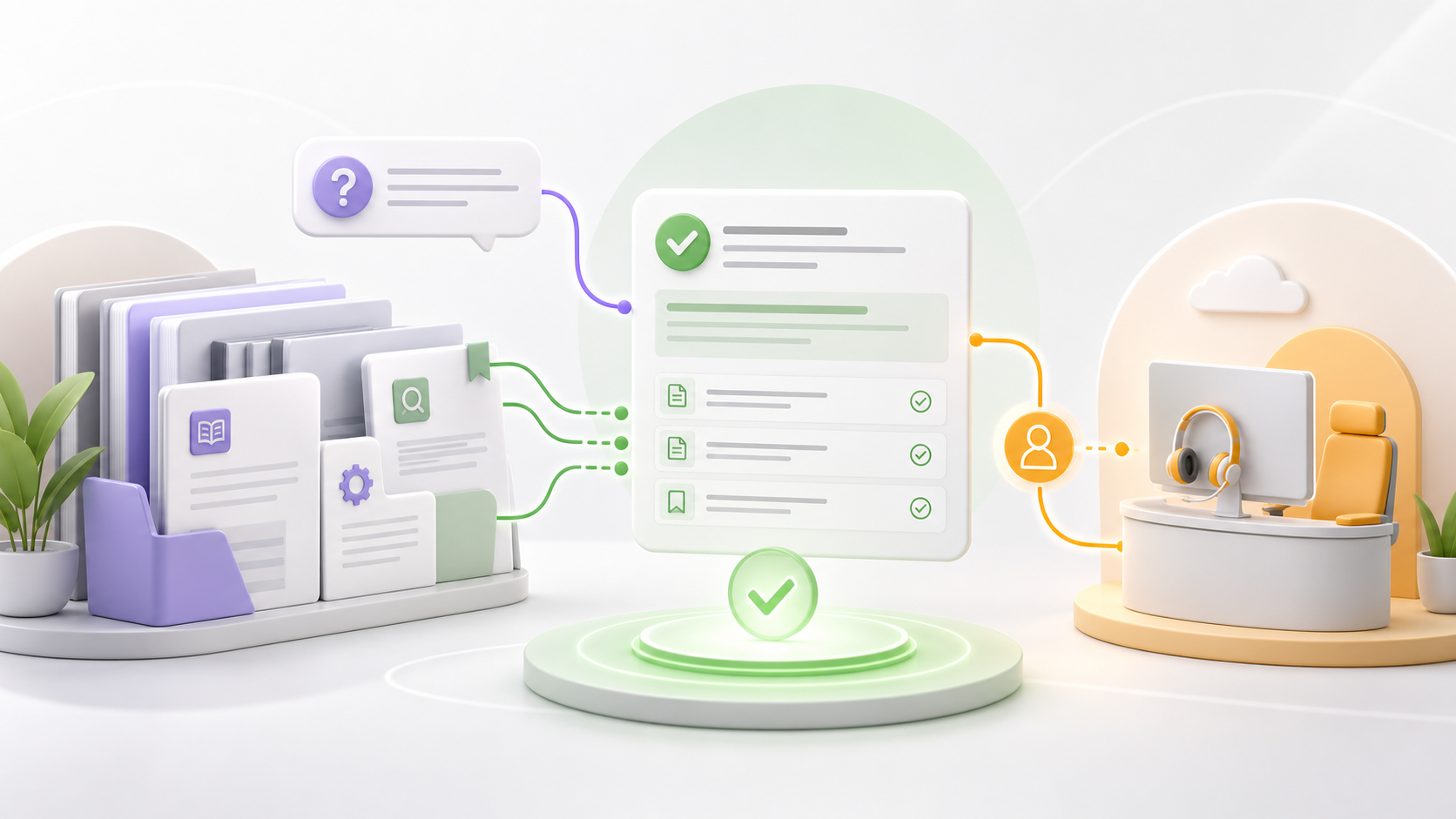
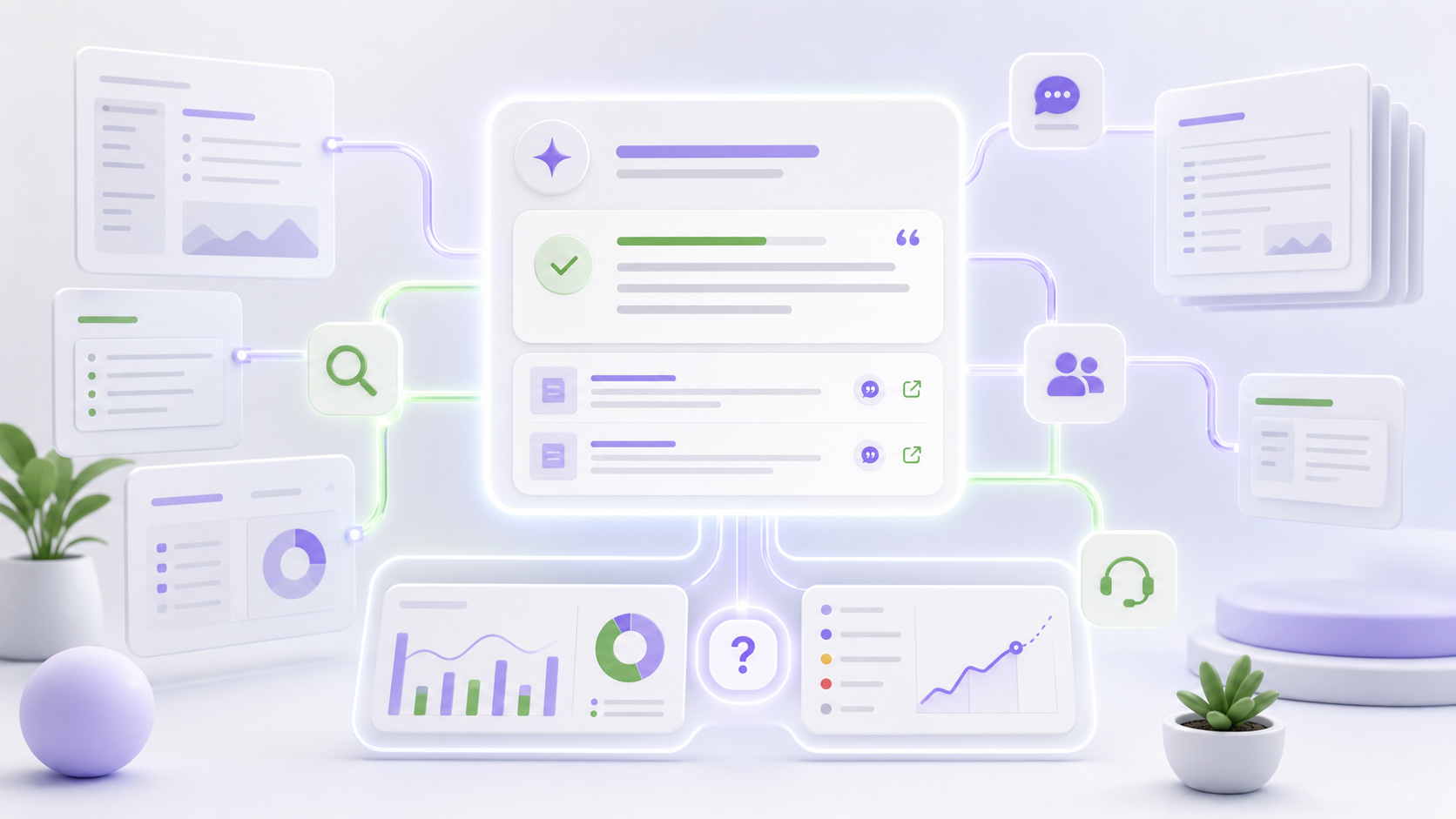
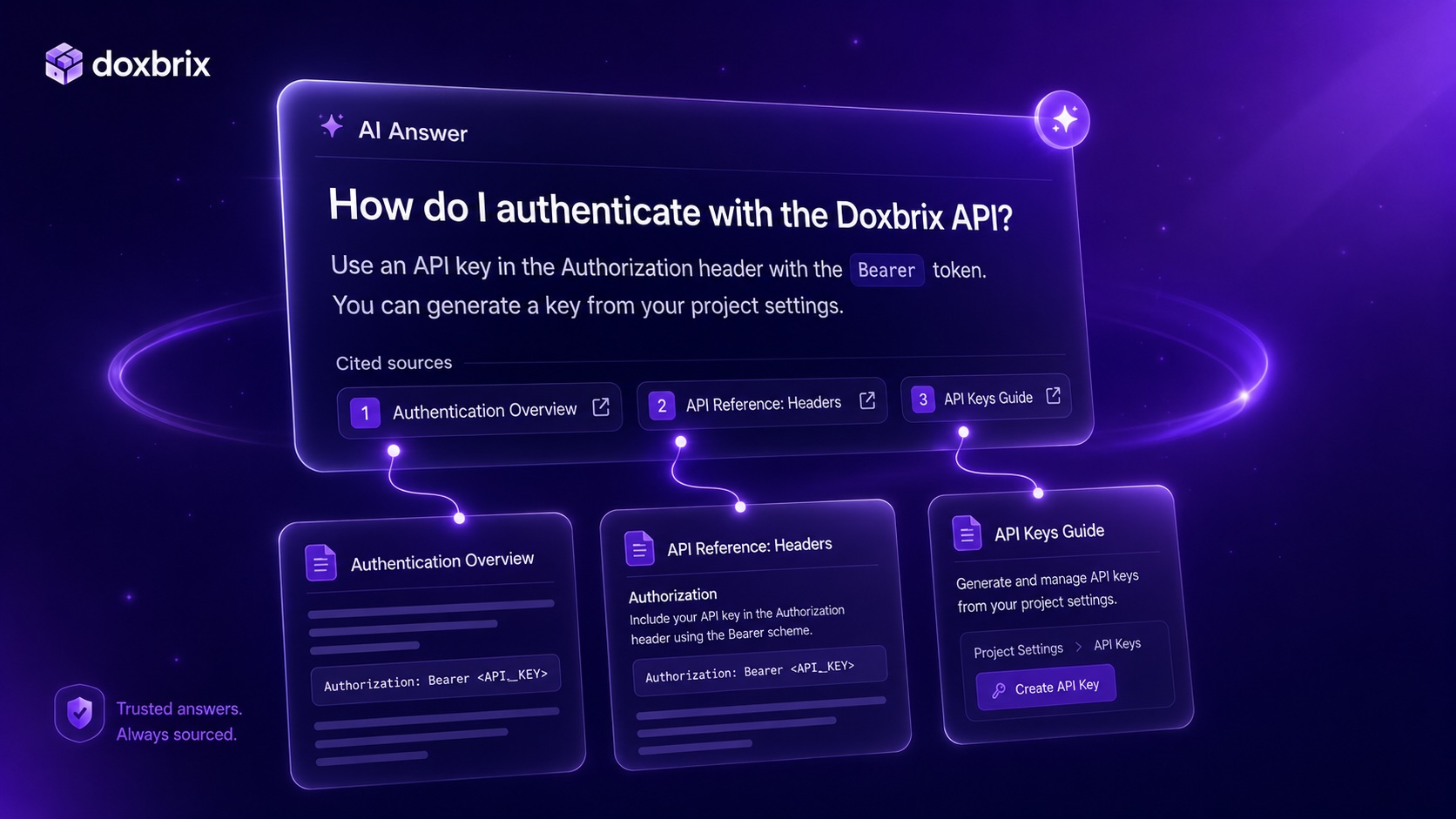
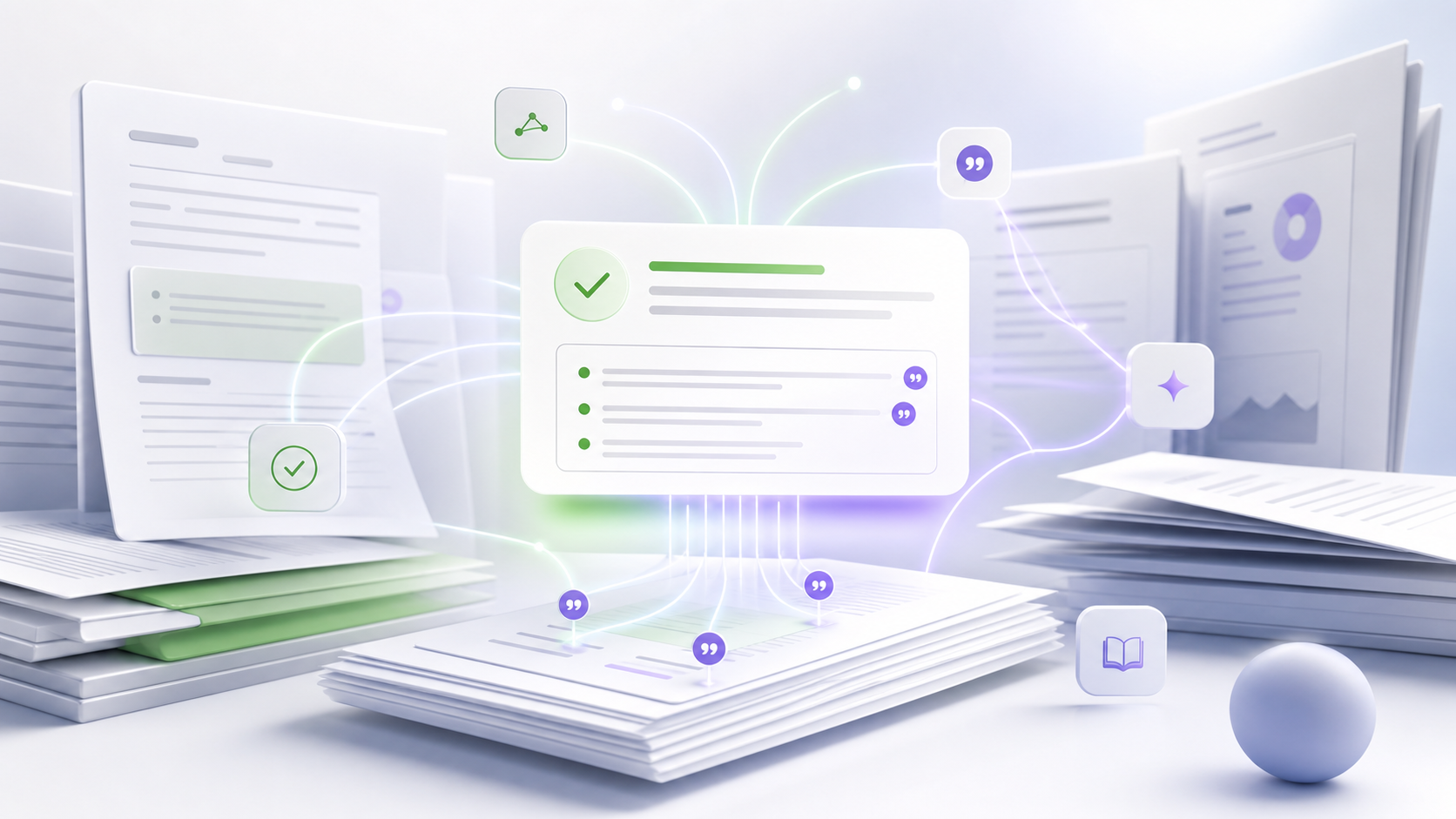
A real documentation assistant works from your approved content. It reads the question, retrieves the most relevant pages or passages, writes an answer using that material, and cites the source. If the docs do not contain enough information, it should say so instead of guessing.
That changes the relationship between the reader and the answer. The reader is not being asked to trust a black box. They can click the citation, read the source page, and keep going if they need more detail. It also gives your team a practical way to improve the system. If an answer is weak, you can inspect the cited page and fix the actual content. Maybe a paragraph is stale. Maybe a condition is missing. Maybe the article title is clear to your team but not to customers.
The assistant should support the docs, not hide them
One mistake teams make is treating an assistant as a replacement for the help center. That sounds efficient, but it does not match how people learn. Sometimes a reader wants a quick answer. Sometimes they want the full concept. Sometimes they need the warning, the setup steps, and a related page before they feel comfortable taking action.
The best experience is not chat instead of docs. It is chat and docs working from the same source of truth. The assistant gives the fast answer. The citation sends the reader back to the full page. The full page gives structure, examples, and deeper context. Search, navigation, and clear writing still matter.
AI does not remove the need for documentation quality. It exposes it. If your docs are clear, the assistant becomes useful quickly. If your docs are thin or outdated, the assistant will surface those gaps because readers will keep asking questions the content cannot answer.
The best feedback is often the missing answer
Teams usually think the main value of an AI documentation assistant is fewer support tickets. That matters, but the bigger long term value is the feedback loop. Every unanswered question tells you what customers expected to find and could not. Every weak answer shows where a page almost helped but did not quite land. Every repeated question points to a confusing workflow, missing article, or product area that needs clearer guidance.
Without an assistant, those signals are scattered across support tickets, sales calls, Slack threads, and the memory of teammates who answer the same question every week. With a good assistant, they become a visible docs backlog. You can see what readers asked, which answers helped, which pages were cited, and where the assistant had to hand off.
That is how documentation becomes a living system. Readers ask. The assistant answers when it can. The gaps become visible. Your team improves the content. The next reader gets a better answer.
How to evaluate one
When you test an AI documentation assistant, do not only ask the perfect demo question. Ask something your docs do not cover and see whether it admits the gap. Ask about a recent product change and check whether the answer reflects the latest approved page. Click the citations and make sure they point to genuinely useful sources, not loosely related articles. Update or unpublish a page, then ask again and see whether the answer changes with the source of truth.
Also look at the handoff. If the assistant cannot resolve an issue, the human who picks up the conversation should receive the question, the context, and the related docs that were considered. Otherwise the customer has to repeat everything, which makes the assistant feel like another obstacle instead of part of support.
The human work still matters
The phrase "AI documentation assistant" can make it sound like the machine is doing the important work. It is not. The important work is still deciding what is true, explaining it clearly, reviewing changes, removing stale advice, and listening when customers get stuck.
The assistant helps that work travel farther. It finds the right page faster, turns it into an answer the reader can use, and shows your team where the content is failing. That is the right role for AI in documentation: not a writer of unchecked facts, but a practical layer that helps readers move from confusion to clarity without your team losing control of the source.
Imagine the customer from the beginning. They ask the question in their own words. The assistant finds the approved page, gives a clear answer, cites the source, and the customer solves the issue without opening a ticket. The next morning, your team can still see the question. If the answer was good, great. If it was weak, the gap is visible. That is what an AI documentation assistant should do.