Grounded, cited answers beat a chatbot bolted onto your help center
A generic chatbot guesses. A grounded agent retrieves your approved docs and cites them. Here's how grounding actually works, why it changes your support economics, and how to tell a real grounded agent from a demo.
There's a fast way to add "AI" to a help center: drop in a chatbot, point it at a language model, and let it talk. It demos beautifully. Then a customer asks about a feature you deprecated last quarter, and it confidently invents an answer, complete with steps, button names, and a tone of total certainty.
That's the difference between a chatbot and a grounded agent. One talks. The other checks.
What a plain chatbot actually does
A language model is trained to predict the next plausible token, not to be correct. On its own it answers from a frozen, blended memory of everything it read during training, which does not include your product, your latest release, or the policy you changed yesterday. So when you ask it a question about your docs, it does the only thing it can: it produces text that sounds like a correct answer.
Sometimes that's right. Often it's subtly, confidently wrong. And "confidently wrong" is the worst possible failure mode for support, because the reader has no way to tell a real answer from a fabricated one. They follow the steps, hit a wall, and now you have an angrier ticket than if the bot had said nothing at all.
Grounding is the whole game
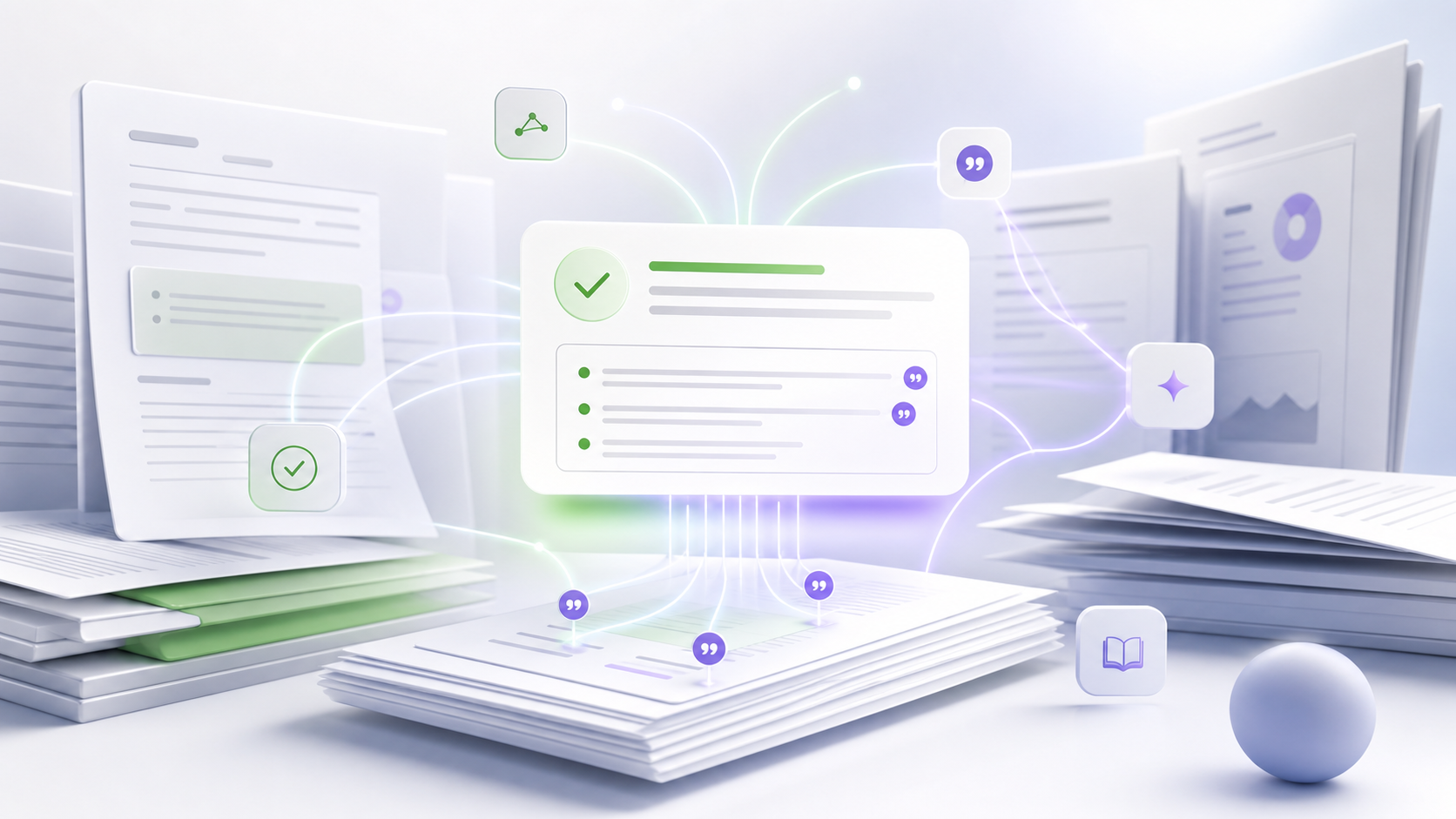
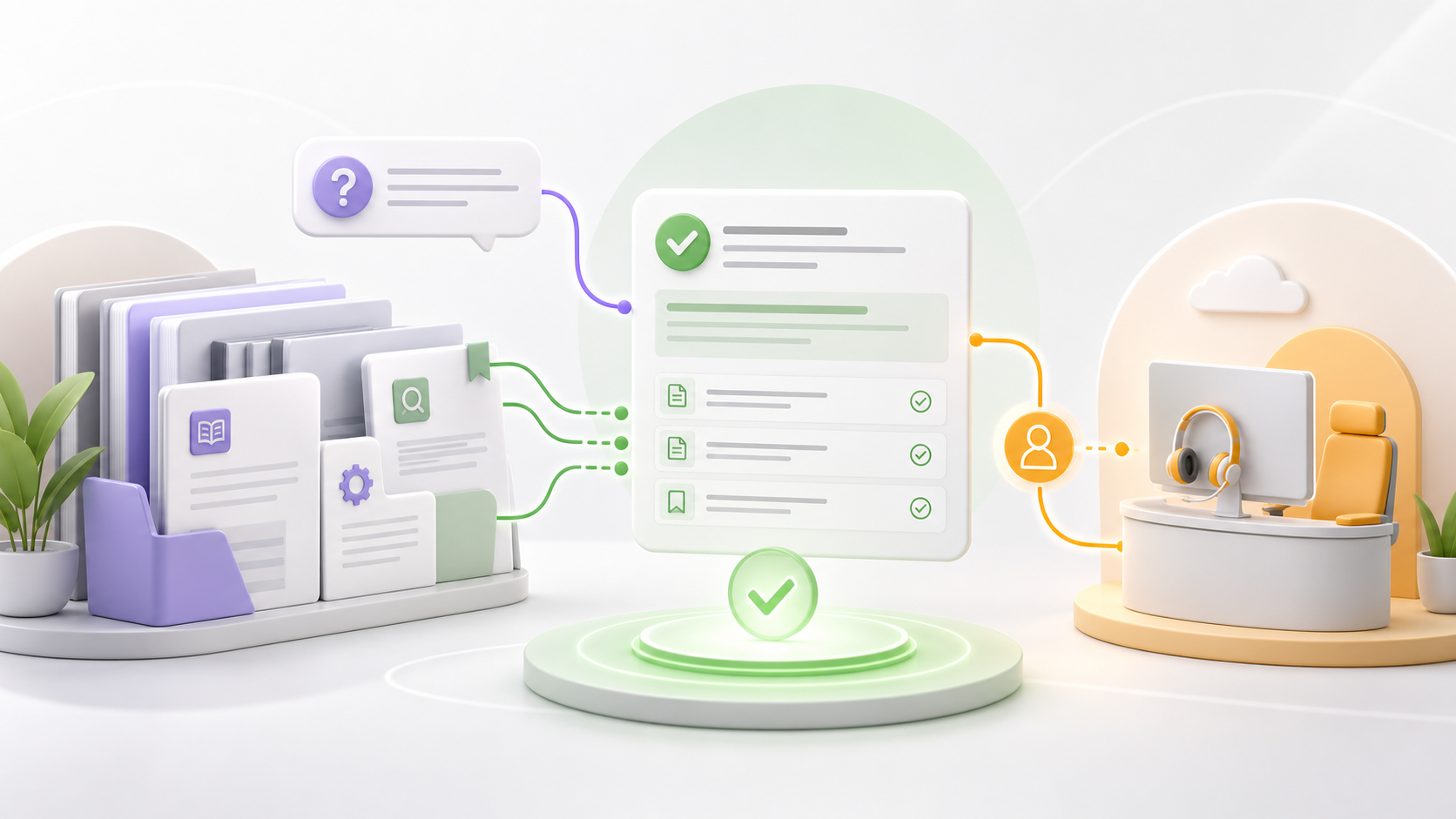
A grounded agent doesn't answer from the model's memory. It answers from your content, fetched at the moment of the question. The flow looks like this:
- Understand the question, including follow-ups that depend on earlier turns.
- Retrieve the most relevant passages from your approved documentation.
- Answer using only that retrieved context, in your product's own language.
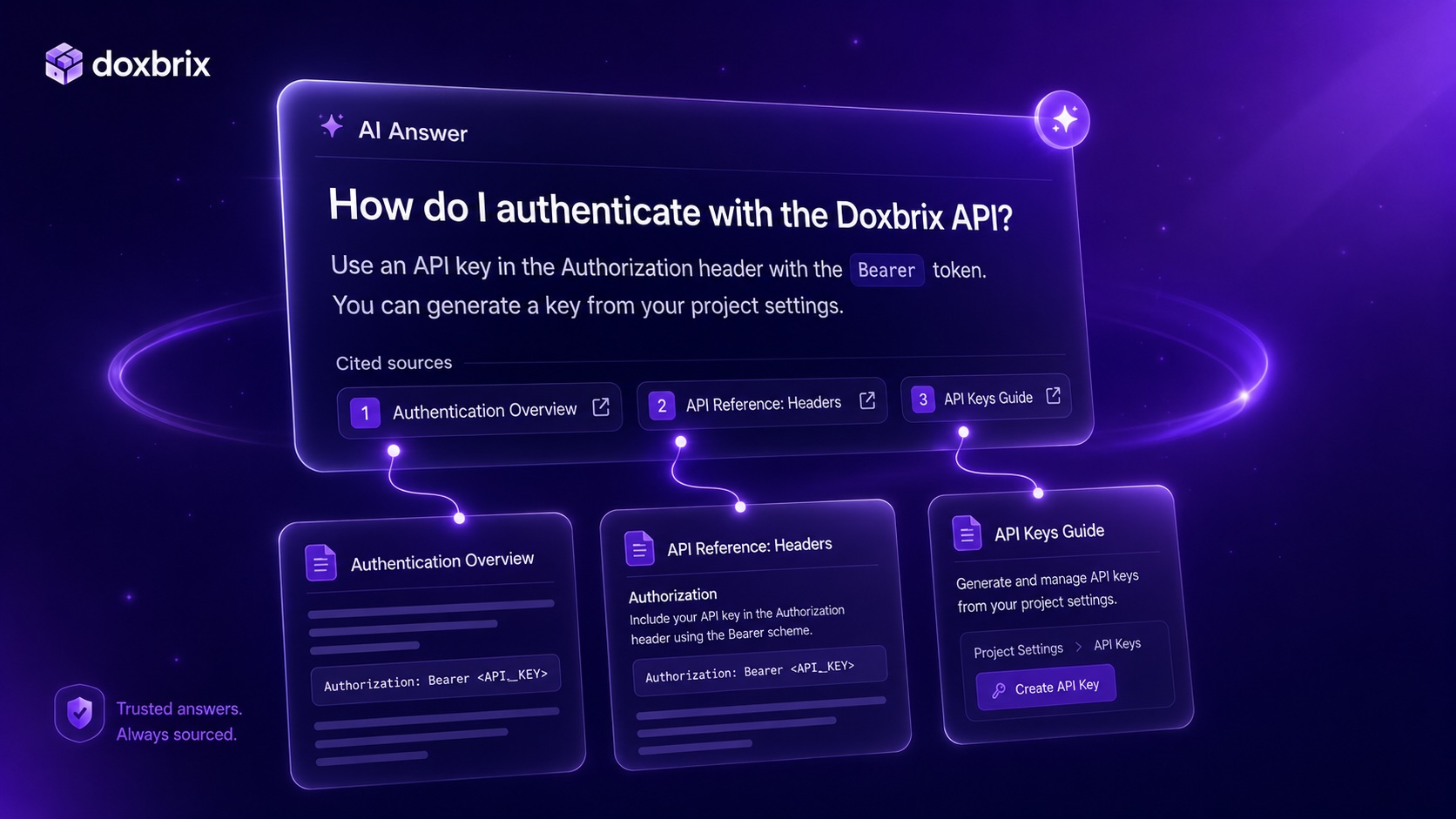
- Cite the exact pages it used, so the reader can verify in one click.
The model is still doing the writing (phrasing, summarizing, adapting to the question), but the facts come from your docs, not its memory. That single architectural choice is what turns "plausible" into "correct."
Citations aren't decoration. They're the trust mechanism. A reader who can click through to the source page believes the answer; one who can't, doesn't.
Retrieval quality decides answer quality
Here's the part the demos skip: a grounded agent is only as good as what it retrieves. If step 2 pulls the wrong passages, steps 3 and 4 produce a beautifully cited wrong answer. Garbage in, confidently-cited garbage out.
Good retrieval is semantic, not keyword-based. A reader who types "my login keeps timing out" should reach the page titled Session expiry and token refresh, even though they share almost no words. That requires understanding meaning (embeddings that map intent to content) rather than matching strings.
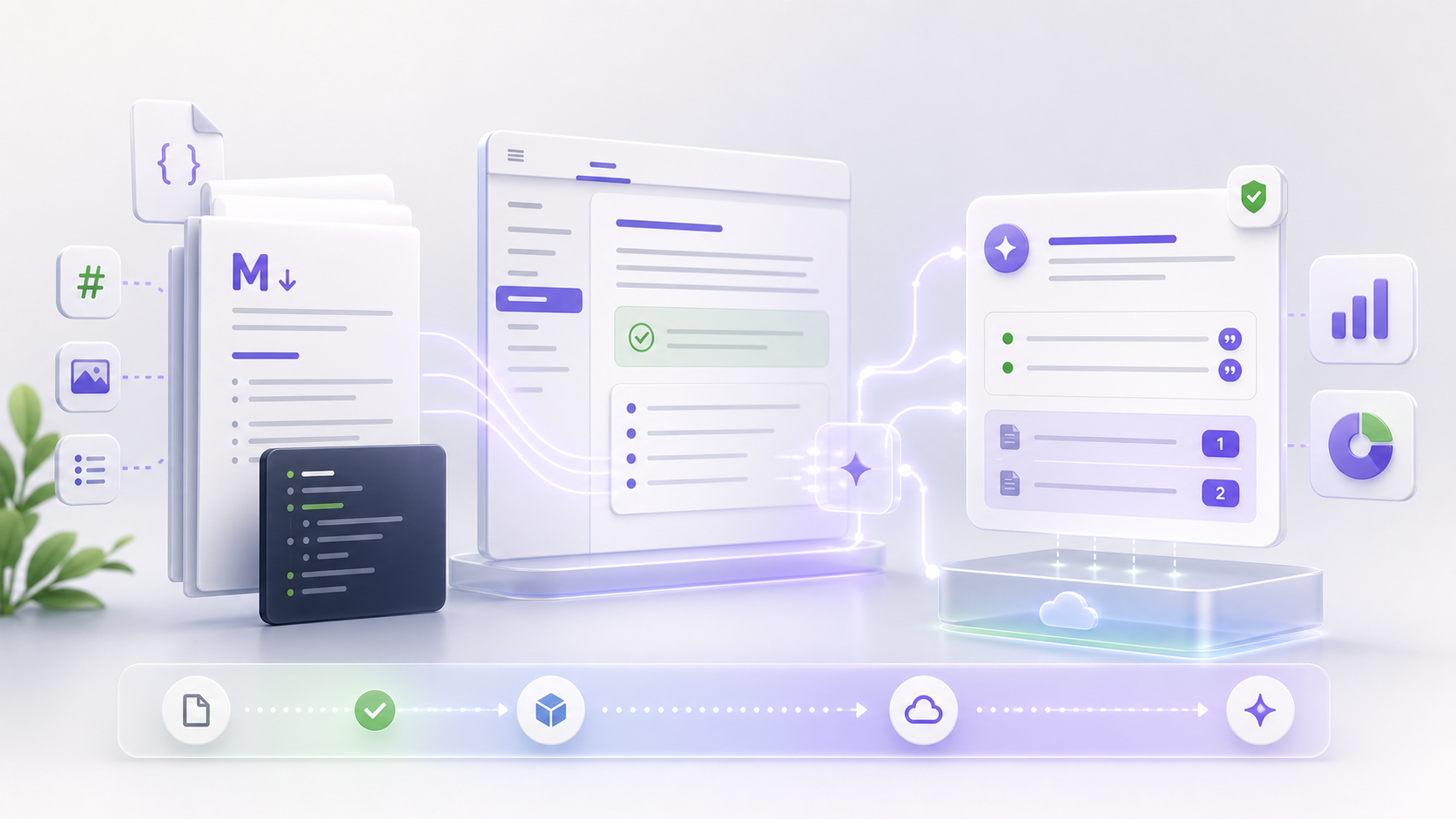
It also depends on how your content is chunked. Break a page into fragments that are too small and the agent loses context; too large and retrieval gets noisy. doxbrix handles chunking and embeddings for you the moment a page is approved, so retrieval stays sharp without you tuning a vector database by hand.
Citations are the trust mechanism
When an answer shows its sources, three good things happen at once. The reader can verify it instead of taking it on faith. The answer becomes auditable: you can see exactly which page produced it, which makes wrong answers fixable instead of mysterious. And your documentation gets credit for the work it's doing, which makes the case for investing in it.
An answer without citations asks the reader to trust a black box. An answer with citations hands them the receipts.
Knowing when to say "I don't know"
The most underrated skill in a grounded agent is abstention: recognizing when the docs don't actually cover the question and refusing to fill the gap with invention.
A good agent treats "I don't have a confident answer for that, let me connect you with the team" as a success, not a failure. It's far better to hand off cleanly than to guess. And the handoff should carry context: the question, the conversation so far, and the closest relevant pages, so the human who picks it up isn't starting from zero.
Deflection isn't refusing to escalate. It's resolving what can be resolved, and escalating the rest well.
Why approved-only content matters
Grounding solves where the answer comes from. Governance solves whether that source should be trusted yet. doxbrix answers from approved content only, using the same review and publishing workflow your team already uses.
That means draft pages don't leak into customer answers, half-finished experiments stay internal, and a deprecated page stops being cited the instant it's unpublished. You get to move fast on writing without worrying that an unfinished thought will show up in front of a customer with a citation next to it.
Why this changes your support math
Ungrounded answers create work. Every confident-but-wrong reply becomes a ticket, sometimes an angry one. Grounded answers do the opposite:
- Readers self-serve because they trust what they read.
- Support sees fewer repetitive tickets, the "how do I reset my password" class of question stops reaching a human at all.
- The tickets that do escalate arrive with context, because the agent already tried, which means faster resolution and happier agents.
The economics are simple. If a meaningful share of your repetitive questions resolve without a human, every point of deflection is time your team gets back for the hard problems that actually need them. And unlike hiring, that capacity scales the instant you publish a new page.
How to tell a real grounded agent from a demo
If you're evaluating one, push on these:
- Ask about something you don't document. A grounded agent should decline and offer a handoff. A chatbot will happily make something up.
- Click the citations. They should land on the exact passage, not a vaguely related page.
- Publish a change, then ask about it. The answer should reflect it within moments, no manual re-indexing step.
- Unpublish a page. It should immediately stop being cited.
A tool that passes all four isn't a chatbot with a personality. It's an assistant your readers trust and your support team relies on, not one you have to apologize for.