AI support agent for docs: how to reduce tickets without losing trust
An AI support agent for docs should answer repetitive questions with cited sources, hand off cleanly, and turn support gaps into better documentation.
Every support team knows the ticket that should not have become a ticket. The customer asks something your team has answered many times before. The answer is in the docs, in a saved reply, and probably in a few old Slack threads. Still, the customer did not find it when they needed it, so now a human has to step in.
That is not laziness from the customer. It is usually a discovery problem. They searched the wrong phrase, landed on the wrong page, skimmed too quickly, or did not know your internal product language. When people cannot find a clear answer fast enough, they ask support.
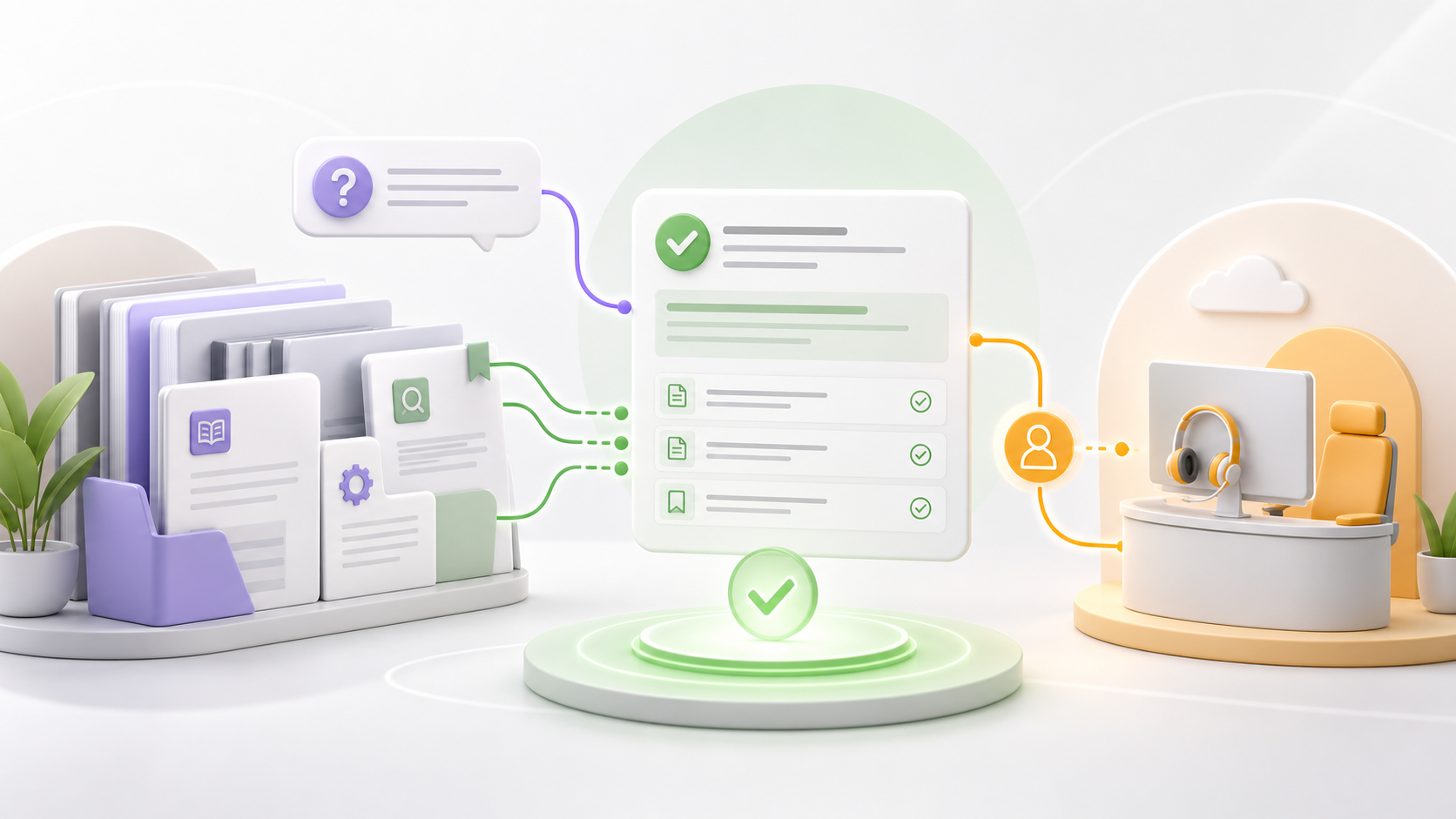
An AI support agent for docs is built for that moment. Its job is not to keep customers away from humans. Its job is to answer the questions your documentation can already answer, admit when the docs are missing context, and give the support team a better starting point when a human needs to help.
Bad automation makes customers feel trapped
People are cautious about support automation because many support bots have trained them to be cautious. You describe the issue, the bot suggests an unrelated article, you say it did not help, and the bot suggests another article that also misses the point. By the time you reach a person, you are more frustrated than when you started.
That kind of automation does not reduce support load in a healthy way. It delays support and damages trust. A useful AI support agent should feel like a knowledgeable teammate who knows the docs, not a locked door in front of your help desk.
The standard is simple. It should answer when the answer exists. It should show sources. It should ask for a useful detail when the question is vague. It should say when the docs do not cover the issue. And when it hands off, it should make the human conversation faster instead of making the customer repeat the whole story.
The goal is resolution, not deflection at any cost
"Ticket deflection" is a common phrase, but it can push teams toward the wrong behavior. If the only goal is fewer tickets, you may design a system that blocks customers even when they need help. The dashboard may look better while the customer experience gets worse.
The better goal is resolution. If the docs contain a reliable answer, the support agent should resolve the question immediately. If the docs are incomplete, the agent should hand off with context. If the question exposes a missing article, the system should help your team see that gap and fix it.
That way, fewer tickets become the result of better service, not a trick. Customers get answers faster. Support spends less time on repeated questions. Documentation improves because the weak spots are visible.
Why docs are the right source
Most support teams already have a body of knowledge. The challenge is that it lives across help center pages, product docs, onboarding guides, API references, saved replies, release notes, and internal comments. Some of it is public. Some is private. Some is current. Some is old enough to create problems.
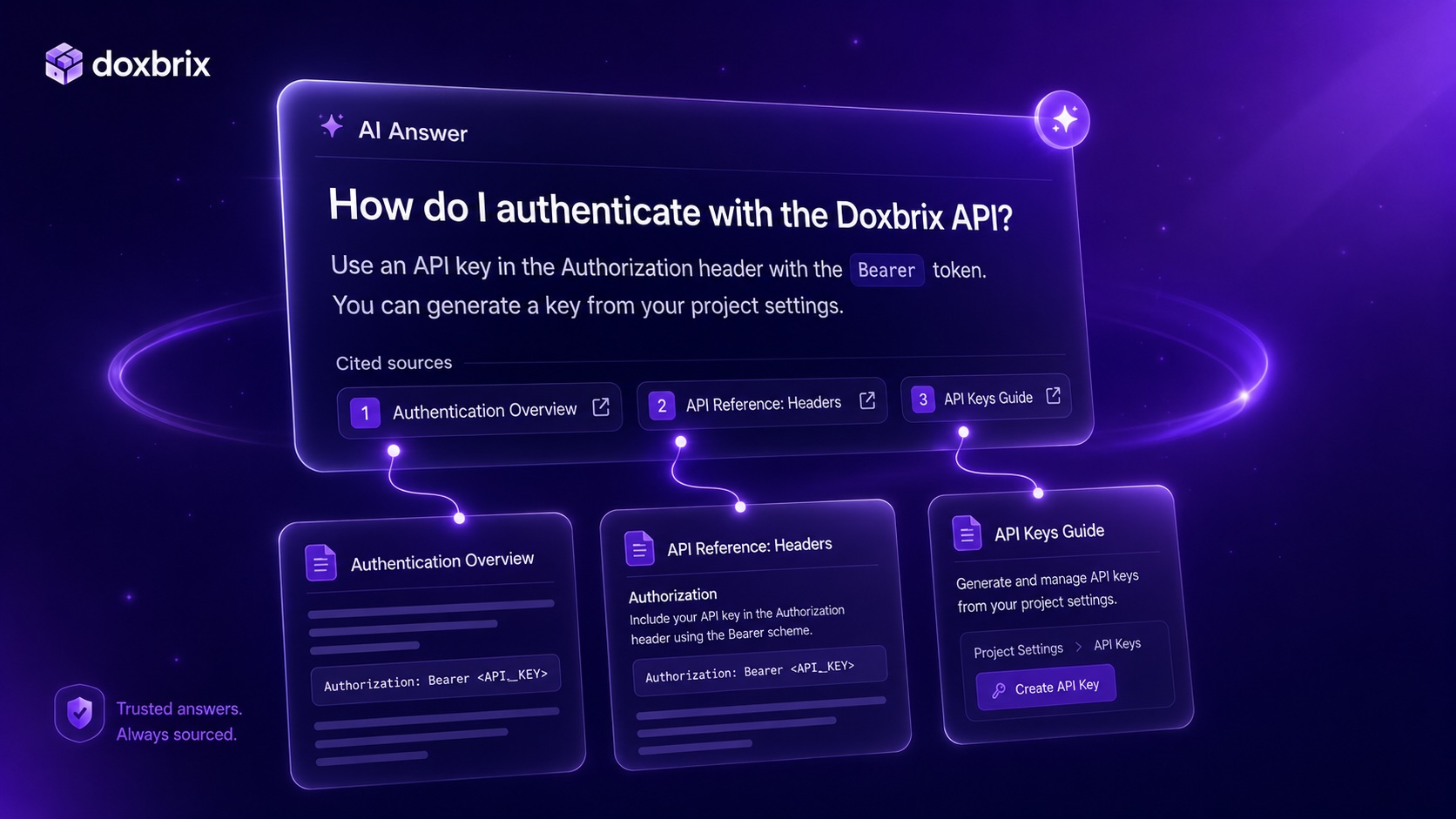
A docs based support agent is useful because it can be connected to the approved source your team already maintains. It does not need to invent a support policy or guess how the product works. It retrieves the relevant content, answers from that content, and cites the source so the customer knows the answer is grounded in official material.
That is the difference between a support agent that earns trust and one that merely sounds confident. Customers do not just need a smooth sentence. They need a reliable answer.
What a good answer feels like
A good support answer understands the actual problem before trying to solve it. Customers often describe symptoms, not systems. "My invite is broken" might mean the email expired, the domain is restricted, the user already has an account, or the workspace has no seats left. The agent should use the question and context to find the most likely path instead of dumping a generic article list.
Then it should give a direct answer. The customer should not have to read a wall of text. They need the next step, the condition that applies, and any warning that prevents a mistake. The citation should sit beside the answer so the customer can verify it or read the full page if they want more detail.
Even then, the agent needs a clear path to a human. Some issues involve account state, bugs, billing sensitivity, or product edge cases that a docs answer cannot resolve. The handoff should be respectful and complete.
The handoff is where trust is won or lost
The moment an AI support agent cannot answer is not a failure. It is a normal part of support. The failure is making the customer repeat everything.
If a customer has already explained the issue, answered follow up questions, and reviewed suggested docs, the human agent should receive that context. They should see the original question, the conversation, the pages that were considered, and why the assistant could not answer with confidence.
That changes the support experience. The human can begin with, "I see what you tried. The missing piece is..." instead of "Can you explain the issue again?" The customer feels heard, and the support team starts closer to the solution.
The agent should create a better docs backlog
Support teams often know the best documentation opportunities in the company. They know which questions come up every week, which instructions customers misread, and which product areas create confusion. The problem is that this knowledge is usually trapped inside tickets and individual memory.
A docs based support agent can turn those signals into a visible backlog. Questions with no good answer become article ideas. Repeated handoffs show where a page is missing detail. Low confidence answers reveal unclear docs. Popular citations show which pages are doing useful work.
This connects support and documentation in a practical way. Support gets fewer repeated tickets. Documentation gets clearer priorities. Product gets a sharper view of customer confusion. Customers get better answers over time.
Start small and measure the right things
You do not need to automate every support scenario on day one. Start with the questions your team is already tired of answering: billing setup, password resets, API keys, invite problems, installation steps, plan limits, and common integration errors. Make those docs strong, let the agent answer from them, then watch the conversations and improve the pages.
Measure whether customers are actually being helped, not only whether the agent handled a large number of chats. Look at how many questions received a cited answer, which answers were rated helpful, which topics caused handoff, which handoffs repeated, and which cited pages still led to tickets. Those metrics keep the system honest.
For larger teams, governance matters from the beginning. The agent should not answer from drafts, cite deprecated pages, or expose private content to the wrong reader. Governance is not extra process here. It is what lets you put AI in front of customers without holding your breath.
The human team becomes more valuable
A good AI support agent does not make human support less important. It protects the team from repetitive work so they can spend more time on problems that need judgment: complex account issues, bugs, sensitive billing questions, enterprise setups, product feedback, and frustrated customers who need careful listening.
The customer should not feel like they are talking to AI. They should feel like the answer came quickly, made sense, and showed its source. If the answer is missing, they should feel that the handoff was smooth and the human already understands the situation.
That is the real promise of an AI support agent for docs. It makes your existing knowledge work harder. It answers what the docs already cover, hands off what they do not, and shows your team which gaps are costing time every week.